
By ShriprasannaPublished September 14, 2026Updated September 26, 2026
Can Teachers See If You Use ChatGPT? The 7 Ways They Actually Find Out
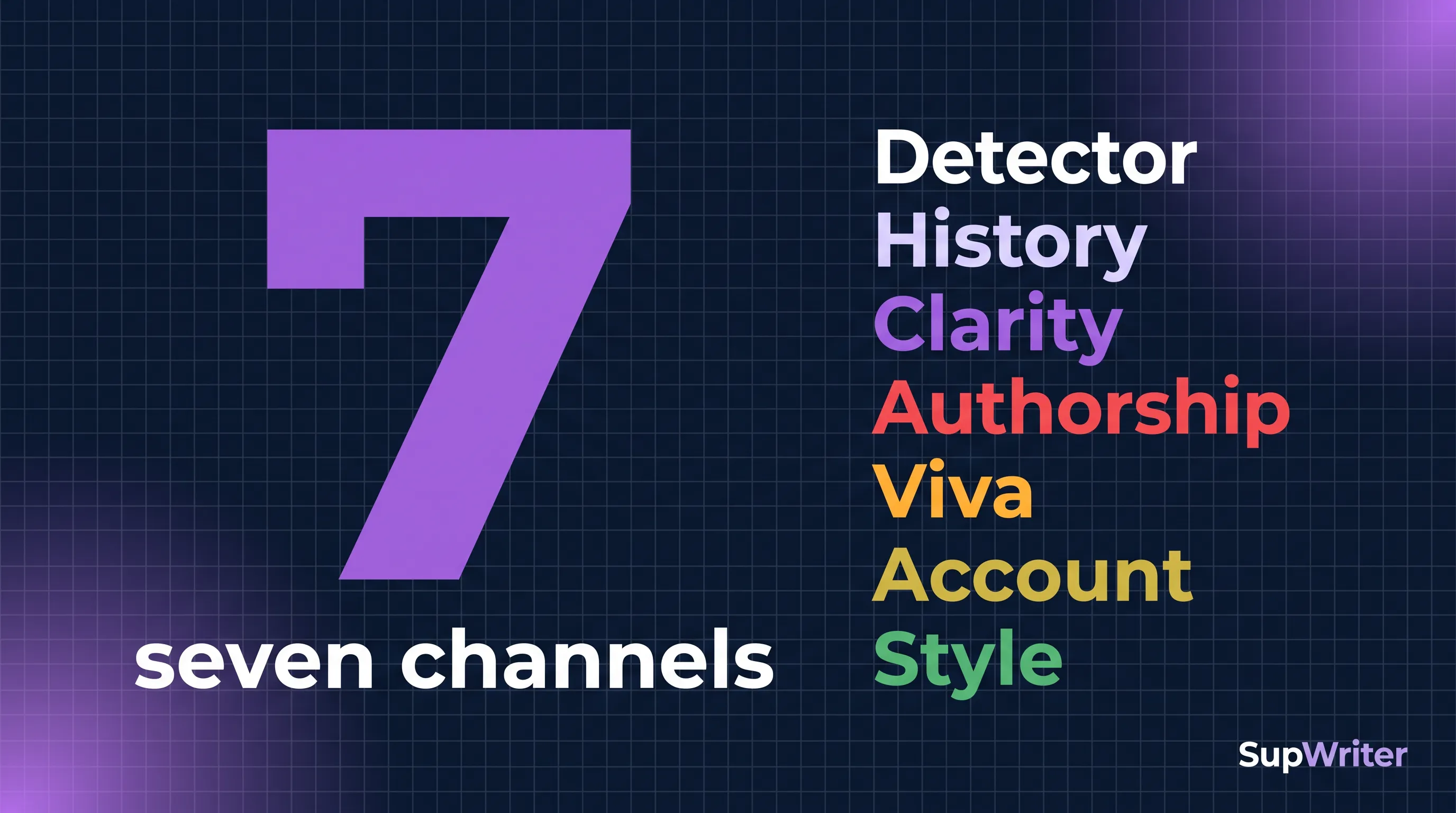
Teachers cannot open a secret ChatGPT log. OpenAI does not send your chats to your professor. What they can see is everything around the paper: an LMS detector (Turnitin, Copyleaks, GPTZero), a giant paste in Docs or Word history, Turnitin Clarity timestamps, Grammarly Authorship, a viva that does not match the prose, sometimes activity on a school-managed Chromebook or account, and the writing itself. Those are seven channels. Most students get caught on two or three of them, not on a dashboard labeled ChatGPT. This is a map of those seven — and the limits on each.
1. The LMS detector: Turnitin, Copyleaks, GPTZero
This is the channel people mean when they ask the title question.
If the assignment runs Turnitin, the report can include an AI writing indicator as well as a similarity score. Those are different meters — similarity vs AI — and you may or may not be allowed to see the AI number (can students see the Turnitin AI score). The classifier has been through 2026 updates; start with the August 2026 note rather than a 2024 screenshot.
If the course is on Canvas, there is still no native Canvas detector. After 25 June 2026, Copyleaks is Instructure’s exclusive / recommended AI and text-matching partner (Copyleaks’ 30 July post says “recommended”). Turnitin may still be the tool on your assignment.
If the course is on Google Classroom, Classroom itself does not classify AI. The 12 May 2026 Turnitin Classroom add-on can, on Workspace for Education Plus (some districts via a Teaching & Learning upgrade), with an Originality license for AI indication.
GPTZero and Originality.ai show up when a teacher pastes your file into a side tool, or when a department license sits outside the LMS. GPTZero’s model 4.9b (12 August 2026) lifted recall on Claude 5, GPT-5.6, Gemini 3.6, and Grok 4.5 series models, per its release notes. That is a classifier update, not a ChatGPT-account backdoor.
Limits: detectors are wrong both ways. ESL writing eats false positives (AI detection and ESL students). A high score is a reason for a conversation, not a confession. A low score is not a hall pass if channel 2 or 5 is loud.
2. Paste and version history
This is the channel that catches people who “beat the detector.”
Google Docs version history is a timeline of the file. A document that goes from a title to 2,200 words in one revision does not look like three nights of drafting. Microsoft Word has its own revision and tracked-changes habits; a clean file with no intermediate drafts is also a tell when the rest of the class submitted messy ones.
Draftback replays a Google Doc’s history as a video. It is a Chrome extension, not a Google AI detector. A teacher needs access to the Doc. On a school-managed Chrome profile they may already have it. On a personal laptop and a Doc you never shared, they do not. Do not upgrade Draftback into omniscience.
LMS dropboxes also reveal paste indirectly: one file, one timestamp, no earlier scaffold uploaded when the rubric asked for an outline last week.
Turnitin Clarity, if that is the composition space, logs paste events on purpose. That is channel 3.
Limits: version history does not say “ChatGPT.” It says “this text did not accumulate the way typing usually looks.” A student who drafts in Notes and pastes once looks similar to a student who pastes a model dump. Process evidence is circumstantial. It is still how a lot of meetings start.
3. Turnitin Clarity timestamps and paste events
Clarity is Turnitin’s writing environment: a composition space, optional AI chat with guardrails, and educator visibility into the process. It is not default on every Turnitin school. It needs its own license. The Google Classroom add-on can assign a Student Writing / Clarity task; Canvas courses can too.
For students, the document that matters is Turnitin’s own FAQs for students using Turnitin Clarity. Paste events are in scope. Timestamps are in scope. If you write in ChatGPT and drop the finished essay into Clarity, you are not hiding from ChatGPT — you are creating a paste event inside the tool your teacher picked because it shows paste events.
Limits: Clarity only sees work composed in Clarity. It does not scrape your ChatGPT history. If the assignment is a normal file upload to Feedback Studio, you are back on channels 1 and 2.
4. Grammarly Authorship
Grammarly Authorship tracks how text entered a Grammarly Doc: typed, pasted, generated. It is not Turnitin’s AI percentage.
Two 2026 facts to keep straight:
- Authorship has been default-on for Grammarly Docs since 10 March 2026 (Grammarly). If you are writing in Grammarly’s document editor, assume Authorship is recording unless you have a documented exception.
- Blackboard picked up Authorship in 2026, after Canvas in September 2025 (Grammarly).
Generative rewrites inside Grammarly can flag. Ordinary spelling and grammar passes generally do not. That distinction is the whole useful part of does Grammarly detect AI writing. Using Grammarly to clean commas is not the same as using GrammarlyGO to rewrite a paragraph.
Limits: Authorship lives on Grammarly Docs (and integrations), not on every file in existence. A plain Google Doc with no Grammarly layer does not grow an Authorship report. A teacher who does not use Grammarly will not see this channel.
5. The viva and the knowledge mismatch
Software is optional. A five-minute conversation is not.
If the paper is confident about a method, a case, or a citation you cannot explain, the detector is beside the point. Professors have been doing this since the first custom-essay mill. AI made the mismatch more common because the prose got smoother than the student’s oral range.
This is also the channel that saves people. A student who can walk through the argument, show notes, and point to a draft trail is in a different conversation than a student who cannot paraphrase their own thesis. We wrote a longer version of that defense in prove your writing is human and professor accused you of AI writing.
Limits: a viva is subjective. It can be unfair, especially for ESL students or students with anxiety. It is still one of the seven, and it does not require a license.
6. School-managed Chromebooks and accounts — qualify this
This is the channel the internet overclaims.
A school-managed Chromebook, Google Workspace account, or MDM-enrolled laptop is not a personal device. Admins can have visibility into Drive, extension lists, browsing on that profile, and installed software. Some districts use classroom-management tools that show open tabs during class. Some log visits to chatgpt.com on the school network.
What that is: possible visibility into use of the website or files on the school account.
What that is not:
- OpenAI handing over chat transcripts to your English teacher
- Classroom “detecting ChatGPT” as a built-in feature
- A guaranteed keystroke log of every device you own
- Proof that a paper was AI-written (visiting the site ≠ submitting generated text)
If you are on a personal phone, off the school VPN, signed into your own Google account, this channel is mostly off. If you are on a district Chromebook in fourth period, do not take advice from a university forum. Ask what the acceptable-use policy actually says. We are not going to invent a monitoring vendor list or a “they can see everything” claim. The honest sentence is: managed devices can log more than you think; they still do not subscribe your teacher to your ChatGPT history.
7. Stylistic tells
Teachers read. After two years of model prose, some of them read for fingerprints.
The Economist’s 30 July 2026 study of bot writing, as summarised by Fast Company, is the cleanest public style note we have this year, and it contradicts a lot of leftover Twitter advice:
- Em dashes: of the models tested, only Claude uses them more often than human writers. Stripping every em dash “because ChatGPT” can make GPT text less typical of humans, not more.
- Punctuation and sentence length: models use fewer commas, semicolons and parentheses than people, and build overly long sentences with “and” as their most overused word. A lack of punctuation turned out to be a better clue than dashes.
Two more patterns show up in plenty of model drafts and are worth editing on sight: not-X-but-Y framing and tricolons (the tidy list of three). Those are our observation, not the study’s.
That list overlaps with what a tired marker notices at 11 p.m. We keep a living vocab page at AI words to avoid in 2026. It is a style guide, not a promise that swapping synonyms beats Turnitin. Cheap paraphrasers barely move perplexity; they just shuffle the same smooth cadence. For model-specific house voices, see humanize GPT-5, GPT-5.6, GPT-6 Astra, Claude Fable 5, Gemini, and Copilot.
Limits: style is not proof. Plenty of humans love a tricolon. Plenty of AI drafts, after a real edit, do not. Channel 7 starts suspicion; it should not end a case by itself.
How the seven stack in real life
A typical catch is not one smoking gun. It is channel 2 (one-revision Doc) plus channel 7 (not-X-but-Y voice) plus a mediocre channel 1 score, then a channel 5 conversation the student cannot survive. Clarity schools skip straight to channel 3. Grammarly-Docs schools add channel 4 without the student noticing default-on Authorship. Chromebook schools add a weak channel 6 (“you were on chatgpt.com at 10:41”) that only matters if the paper already looks generated.
OpenAI still does not watermark ChatGPT text as of September 2026. Anthropic does watermark Claude 5.1, but the Detection API is a private preview for a restricted list of organizations — not a teacher paste box. Do not confuse a Claude watermark with “my teacher saw ChatGPT.”
What to do if you used ChatGPT under a policy that allows drafting help
Follow the syllabus first. If AI is banned, these channels are all reasons not to use it — not a puzzle to solve.
If drafting help is allowed, the boring workflow is the one that survives all seven:
- Use the model for outline, counterargument, or a first pass — then write until you can teach the claim.
- Keep notes, an outline, and intermediate drafts in the same account you will submit from, so version history looks like work.
- Do not paste a finished essay into Clarity or a blank Doc.
- Treat Grammarly as grammar, not as a second generator.
- Run the submission through an AI detector so you see what channel 1 will see. Detectors disagree, so check more than one if you can.
- If the voice is still the GPT house style, a real rewrite — not synonym soup — is the fix. We build SupWriter; disclosure, we sell this. Free is 300 words, once, with no credit card on the free humanizer (you do sign in). Paid plans list at $9.99, $19.99 and $39.99 a month. Its built-in detector is a pre-check on one scoring model, not your school’s detector, and we don’t publish pass rates (how we test). Either way, a rewrite is about the classifier, not about erasing Docs history, Authorship, or a viva.
A humanizer does not make channel 2, 3, 5, or 6 go away. Anyone who says otherwise is selling a story about one of the seven as if it were all seven.
FAQ
Can my teacher see my ChatGPT chat log? Not through OpenAI. They can see LMS reports, file history, Clarity paste events, Grammarly Authorship, and — on a managed device — some account or network activity. That is not the same as reading the chat.
If Turnitin says 0% AI, am I safe? No. Channels 2–7 do not require a positive AI score. A paste event plus a viva is enough to start a case.
Does using Grammarly count as using ChatGPT? Spelling and grammar generally do not flag Authorship. Generative rewrites can. Grammarly is not ChatGPT, but Authorship will still record how the text arrived.
Can they see ChatGPT on my personal phone? Not via Classroom or Turnitin. School Wi-Fi might log domains. A personal off-network device is outside LMS detection. Do not confuse that with “the paper is undetectable.”
Is Claude watermarking a way teachers catch ChatGPT? No. ChatGPT has no text watermark as of September 2026. Claude 5.1 does, via a restricted API. Different lab, different channel.
What’s the single biggest tell in 2026? For file-based classes, a one-step version history plus machine cadence (not-X-but-Y, tricolons, long under-punctuated sentences). For Clarity classes, the paste event. For oral-heavy classes, the viva.
Teachers do not get your ChatGPT inbox. They get detectors, process logs, and you. If a classifier is in the mix, check the draft with the AI detector. If you are editing voice on a policy-allowed draft, start with 300 words on the free humanizer — and still keep a version history that looks like work.
Related Articles
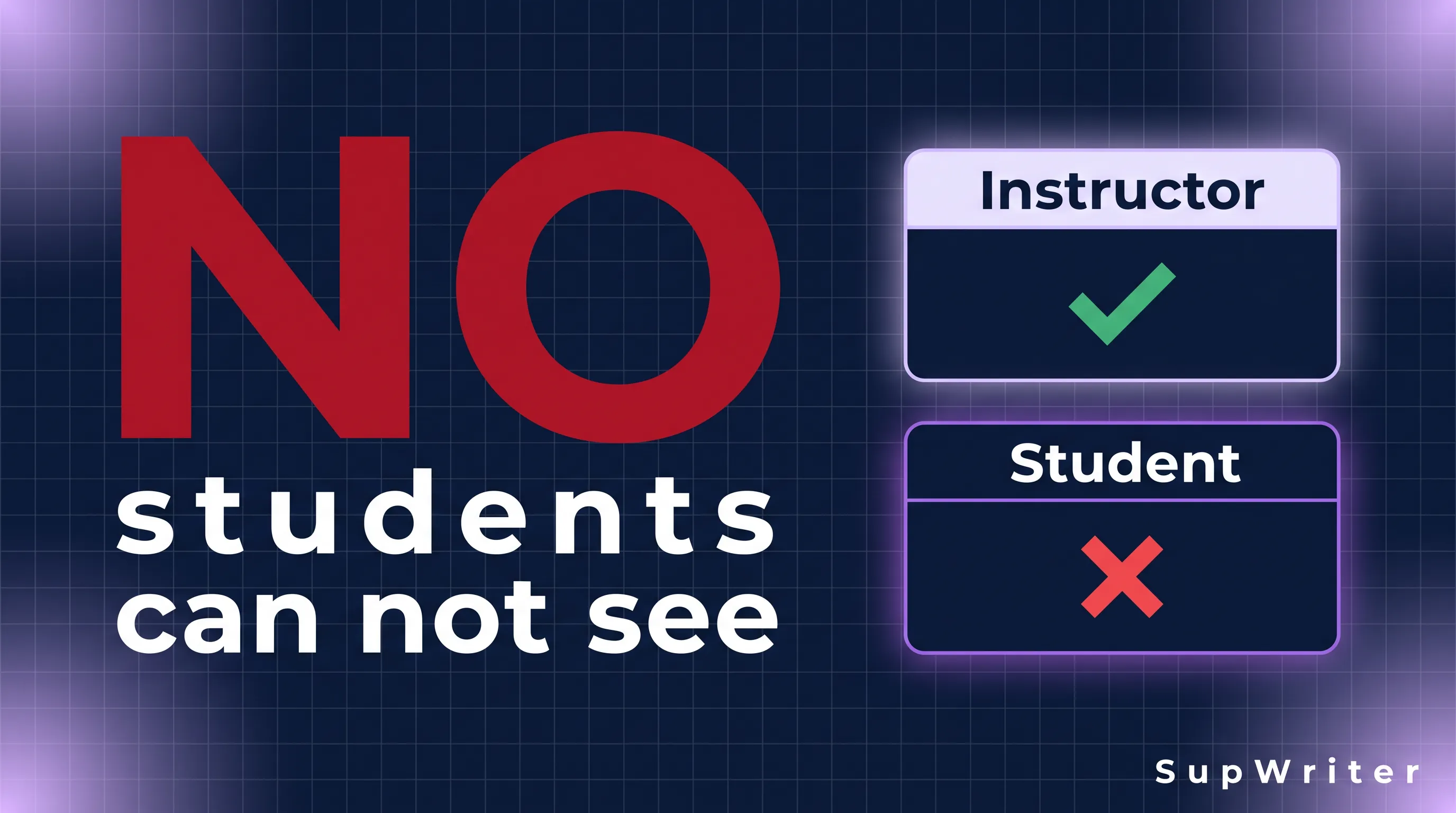
Can Students See Their Turnitin AI Score? (No — Here's How to Check Before You Submit)
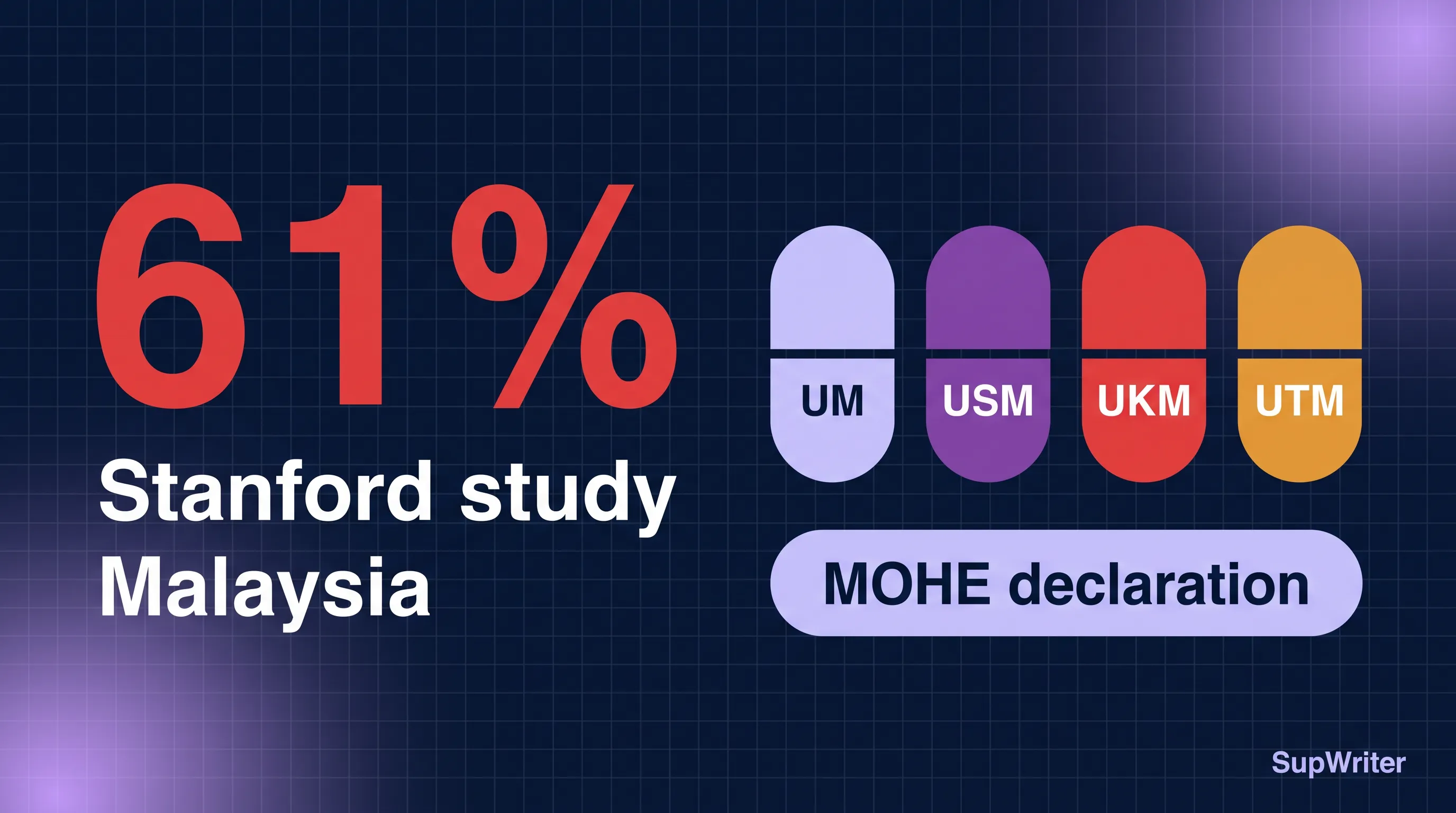
Best AI Humanizer for Malaysian Students (2026): UM, USM, UKM, UTM, UiTM Turnitin Rules and the MOHE Declaration
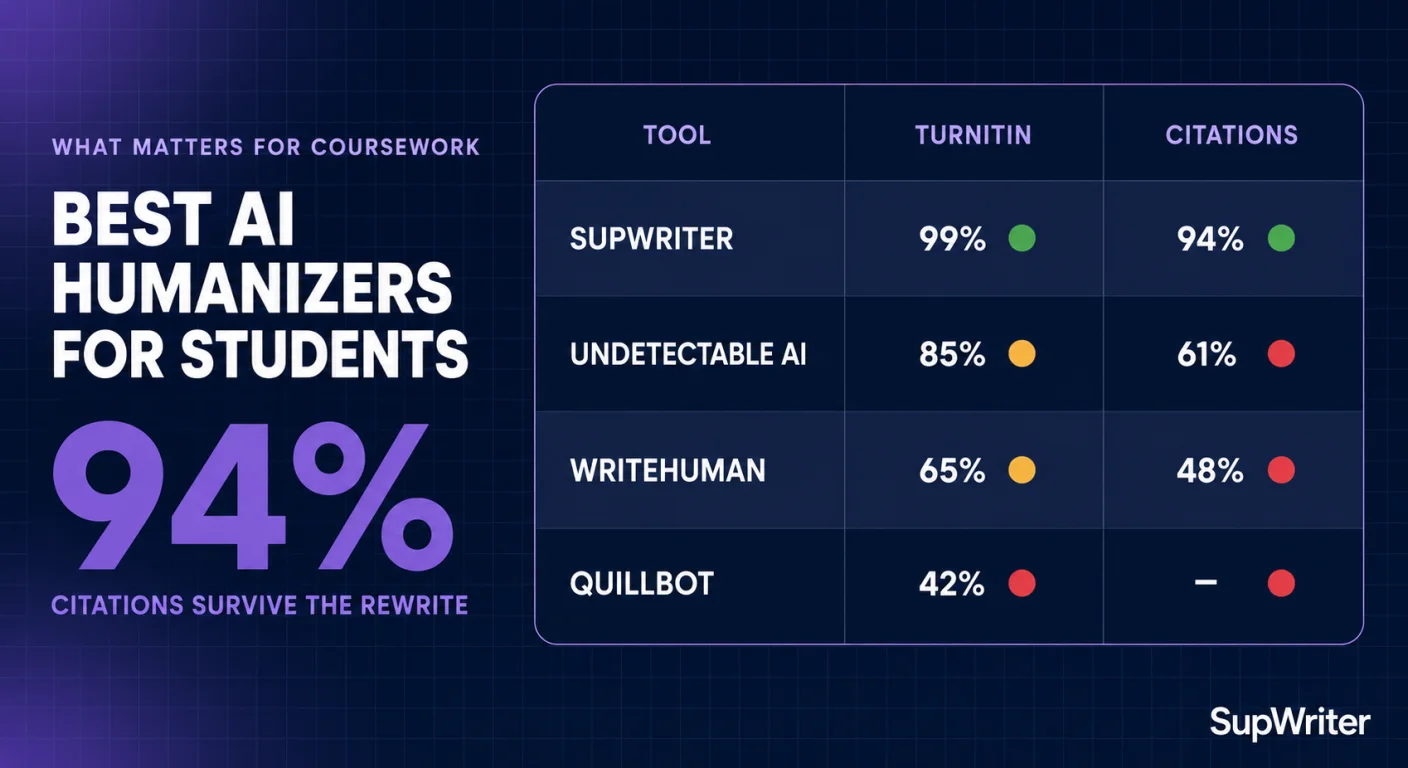
Best AI Humanizers for Students in 2026